LTPO AMOLED Display Explained | Is It the Best Smartphone Screen in 2025?
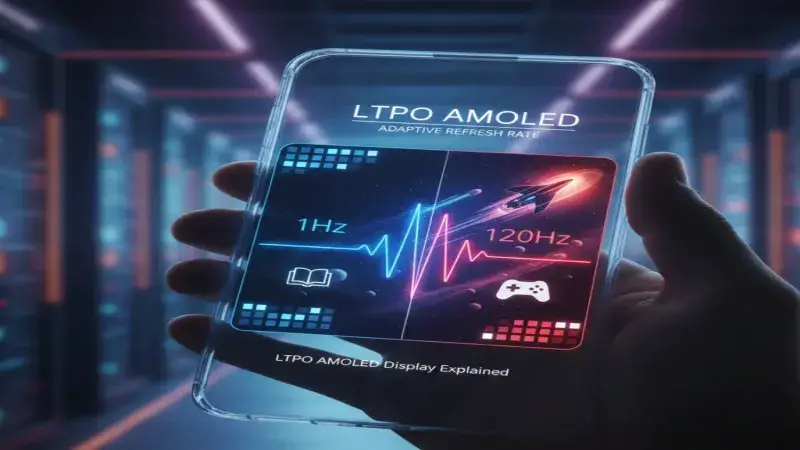
LTPO AMOLED Display Explained: Why It’s the Best Smartphone Screen in 2025
In modern smartphones, the display is no longer just a component—it’s the heart of the user experience. Among all recent innovations, LTPO AMOLED display technology stands out as the most advanced screen solution in flagship smartphones for 2024 and 2025.
But what exactly is an LTPO AMOLED display? How does it differ from AMOLED and OLED? And is it really worth the higher price? This complete guide answers all those questions in depth.
What Does LTPO AMOLED Mean?
The term LTPO AMOLED consists of two technologies:
AMOLED Explained
AMOLED stands for Active Matrix Organic Light Emitting Diode. Each pixel produces its own light, which results in:
-
True blacks
-
Infinite contrast
-
Lower power consumption in dark scenes
-
Rich, vibrant colors
LTPO Explained
LTPO stands for Low Temperature Polycrystalline Oxide. It is an advanced transistor technology that allows the display to dynamically change its refresh rate from as low as 1Hz up to 120Hz or even 144Hz, depending on what you’re doing.
In simple terms:
An LTPO AMOLED display is a smart AMOLED screen that automatically adjusts its refresh rate to save battery and improve performance.
How LTPO AMOLED Technology Works
Unlike traditional AMOLED screens that operate at a fixed refresh rate (60Hz, 90Hz, or 120Hz), LTPO AMOLED displays use adaptive refresh rate technology:
-
1Hz for static images and reading text
-
10–30Hz for video playback
-
60Hz for normal browsing
-
120Hz–144Hz for gaming and fast scrolling
The transition happens instantly and seamlessly, without any visible lag.
LTPO AMOLED vs Standard AMOLED
| Feature | AMOLED | LTPO AMOLED |
|---|---|---|
| Refresh Rate | Fixed | Dynamic (1–120Hz+) |
| Battery Efficiency | Good | Excellent |
| Smoothness | Very Good | Ultra-Smooth |
| Always-On Display | Higher power usage | Extremely power-efficient |
| Cost | Lower | Higher |
Winner: LTPO AMOLED clearly wins in battery efficiency and smoothness.
LTPO AMOLED vs OLED: What’s the Difference?
-
OLED: General category of self-emitting displays
-
AMOLED: Advanced version of OLED used mainly in smartphones
-
LTPO AMOLED: The most advanced generation with adaptive refresh rate
Conclusion: LTPO AMOLED is the most refined and power-efficient OLED technology available today.
Key Advantages of LTPO AMOLED Displays
1. Outstanding Battery Life
Adaptive refresh rate dramatically reduces power consumption, especially during reading, video playback, and idle screen usage.
2. Ultra-Smooth Performance
The display jumps instantly to high refresh rates during scrolling and gaming for a fluid and responsive experience.
3. Perfect Always-On Display Support
Thanks to 1Hz operation, Always-On Display consumes minimal battery.
4. Superior Color Accuracy and Contrast
-
True blacks
-
HDR10+ and Dolby Vision support
-
Excellent brightness levels, often exceeding 2500 nits
5. Premium Viewing Experience
Perfect for movies, gaming, social media, and high-resolution content.
Disadvantages of LTPO AMOLED Screens
Despite their strengths, LTPO AMOLED displays have a few drawbacks:
-
Higher manufacturing cost
-
More expensive screen replacement
-
Potential burn-in with extreme long-term misuse
-
Slightly higher power drain at constant 120Hz gaming
Is LTPO AMOLED the Best Display for Gaming?
Absolutely, LTPO AMOLED is considered the best gaming display technology for smartphones because it offers:
-
Instant switching to 120Hz or 144Hz
-
Ultra-low touch latency
-
Better thermal efficiency
-
Reduced power drain during mixed gaming usage
This is why most flagship gaming phones now rely on LTPO AMOLED screens.
Is LTPO AMOLED Good for Daily Use and Social Media?
Yes. For everyday tasks like:
-
Web browsing
-
WhatsApp, Instagram, TikTok
-
Reading articles
The screen automatically drops to very low refresh rates, delivering:
-
Smoother scrolling
-
Lower heat generation
-
Extended battery runtime
Smartphones That Use LTPO AMOLED Displays
Many premium phones rely on this technology, including:
-
Samsung Galaxy S Ultra Series
-
iPhone Pro Series
-
OnePlus Pro Models
-
Xiaomi Ultra Series
-
OPPO Find X Series
-
vivo X Series
Most of these devices combine LTPO AMOLED with QHD+ resolution and 120Hz adaptive refresh rate.
Is an LTPO AMOLED Display Worth the Extra Cost?
You should choose LTPO AMOLED if you:
-
Play mobile games frequently
-
Watch a lot of videos and streaming content
-
Want maximum battery life
-
Prefer premium flagship performance
Worth every dollar for power users.
However, if your usage is limited to calls, messaging, and light browsing:
-
Standard AMOLED may be the more cost-effective option.
LTPO AMOLED vs Super AMOLED
-
Super AMOLED is Samsung’s enhanced AMOLED branding
-
LTPO AMOLED refers specifically to adaptive refresh rate technology
Some high-end Samsung displays combine both technologies into one premium panel.
The Future of LTPO AMOLED Displays (2026 and Beyond)
Industry forecasts indicate:
-
Adaptive refresh rates from 0.5Hz to 144Hz
-
Up to 40% better energy efficiency
-
Peak brightness exceeding 3000 nits
-
Smarter AI-based power management
LTPO AMOLED is expected to remain the dominant flagship display technology for years to come.
Final Verdict
The LTPO AMOLED display represents the ultimate evolution of smartphone screen technology. It combines:
-
Exceptional visual quality
-
Adaptive ultra-smooth performance
-
Industry-leading power efficiency
-
True flagship-level user experience
If you’re searching for the best smartphone display in 2025 with no compromises, LTPO AMOLED is the clear winner.